French
1845 – 1924
Composer
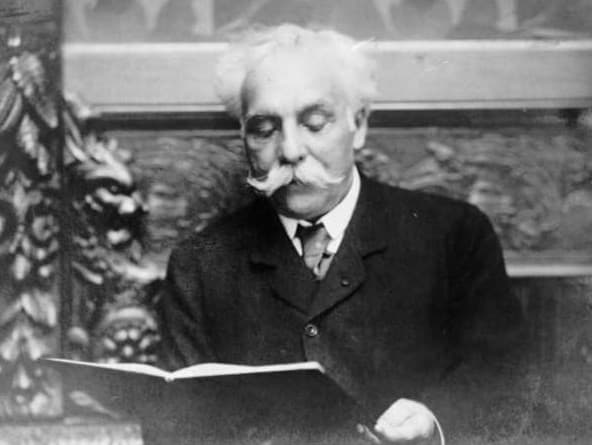
Gabriel Fauré
Biography
Gabriel Urbain Fauré (1845–1924) was a French composer, organist and teacher whose work occupies a distinctive position between Romanticism and the emerging modernism of the early twentieth century. Born in Pamiers, he studied at the École Niedermeyer in Paris under Camille Saint-Saëns, who became a lifelong friend and champion. He served as organist at La Madeleine in Paris from 1896 and as director of the Paris Conservatoire from 1905 to 1920, where his influence on French musical life was profound; his pupils included Ravel, Enesco and Nadia Boulanger.
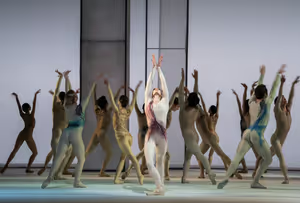
Fauré's Requiem (begun 1887, completed in various versions through to 1900) is his most celebrated and beloved work. Its luminous, consolatory character — which Fauré described as a 'lullaby of death' rather than a work of terror — distinguishes it markedly from Verdi's dramatic Requiem or Berlioz's theatrical Grande Messe des Morts. Kenneth MacMillan choreographed his Requiem (1984) to the piece for Stuttgart Ballet, and it is widely considered among the most moving and spiritually intense of his creations. The ballet was a memorial to his close friend and fellow choreographer John Cranko.
Fauré's other notable works include the Pavane (1887), the Piano Quartet No. 1 in C minor, the song cycle La Bonne Chanson (1894) and the late chamber music. He suffered progressive hearing loss from the 1890s and was almost totally deaf by the end of his life.
Works (1)
Upcoming Performances
No upcoming performances scheduled.