Herman Løvenskiold
August Bournonville
Romantic (1820–1880)
Work
La Sylphide
About This Work
La Sylphide is the quintessential work of the Romantic ballet era — a Scottish Gothic fantasy of impossible yearning, in which a mortal man destroys both himself and the ethereal spirit he loves by attempting to make her earthly. The ballet's story is simple and devastating: on the morning of his wedding to the warm and loyal Effie, the young Scotsman James is visited by a Sylph — a creature of air and imagination who has fallen in love with him. Bewitched by her, James abandons Effie and follows the Sylph into the enchanted forest, where a witch's poisoned scarf brings catastrophe.
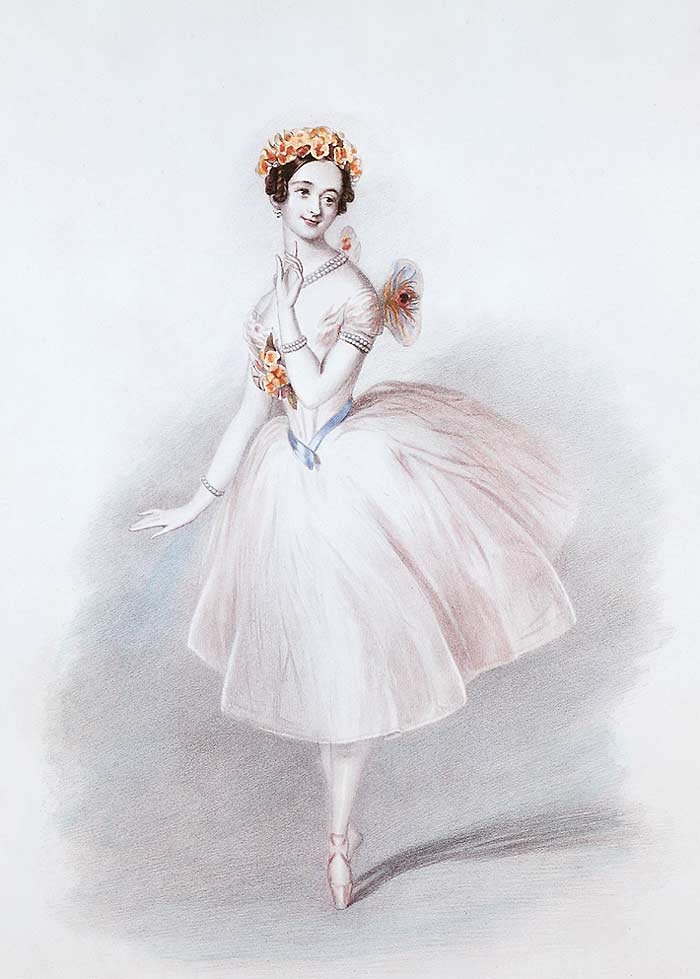
The first version of La Sylphide was created in Paris in 1832 for the Opéra, with Marie Taglioni in the title role — a performance that changed the course of ballet history. Taglioni's pointe work was transformed by the ballet's supernatural requirements into something genuinely expressive of transcendence, and it is La Sylphide that established the image of the ballerina en pointe as the defining symbol of Romantic-era ballet. The white tutu of the Sylph — light, layered and floor-length — became the template for all subsequent Romantic ballets.
The version most widely performed today is Auguste Bournonville's 1836 staging for the Royal Danish Ballet, with music by Herman Løvenskiold, which replaced the original Taglioni production. Bournonville's choreography is notable for its buoyant, characteristically Danish style — bright footwork, soft and unaffected port de bras, and a lightness that seems to defy gravity. English National Ballet has long been associated with fine productions of this enduring classic, which continues to captivate audiences with its bittersweet meditation on desire, loss and the impossibility of possessing beauty.
Composer (1)

Choreographers (1)

Upcoming Performances
No upcoming performances scheduled.