Gustav Mahler
Kenneth MacMillan
Mid-Century (1945–1980)
Work
Song of the Earth
About This Work
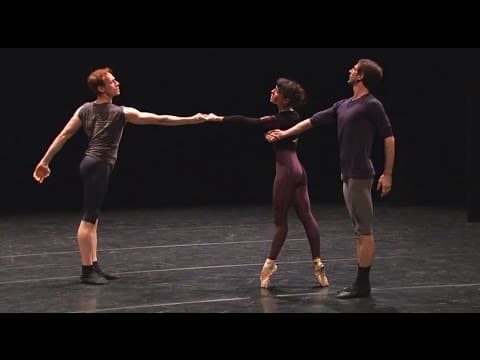
Kenneth MacMillan's Song of the Earth is widely considered his greatest masterpiece — a meditation on life, love, death and renewal of such shattering beauty that it is often spoken of as one of the most profound works in the entire ballet repertoire. Created for Stuttgart Ballet in 1965 and later taken into The Royal Ballet's repertoire, the ballet sets Mahler's Das Lied von der Erde (The Song of the Earth) as a dance for three — a Man, a Woman and the Messenger of Death — exploring the cycle of human existence against the backdrop of one of the most overwhelming of all orchestral song cycles.
Mahler composed Das Lied von der Erde in 1908-09, after the deaths of his daughter and the diagnosis of his own fatal heart condition, setting six poems from a collection of Tang dynasty Chinese poetry translated into German. The music is simultaneously a lament and an affirmation, ending not with despair but with the consoling word "Ewig" — forever, eternally — as the human voice slowly dissolves into the orchestra. MacMillan's choreography matches this ambiguity with extraordinary sensitivity, neither sentimentalising death nor denying it, but holding both grief and acceptance in the same breath.
The Messenger of Death, danced by a male figure who moves between the Man and Woman with quiet inevitability, is one of MacMillan's most haunting creations — neither threatening nor comforting, simply present, a fact of existence. The central pas de deux between Man and Woman, danced against the backdrop of the Messenger's gentle interference, is an image of human love in the face of mortality that few who have seen it can forget.
Song of the Earth demands dancers of the highest calibre not merely technically but emotionally and musically. It remains one of the defining works of the modern repertoire and a testament to the capacity of ballet to bear the weight of the most profound human experiences.
Composer (1)

Choreographers (1)
Upcoming Performances
No upcoming performances scheduled.