Visiting & Accessibility
Address
Nearest transport
Buses 2, 3, 5, 7, 8, 14, 31, 37, 41, 42 serve Nicolson Street directly. South Bridge bus station adjacent. Edinburgh Waverley railway station 5-minute walk southeast.
Box office
0131 529 6000
Accessibility
Venue
Festival Theatre, Edinburgh
About
Festival Theatre Edinburgh occupies Scotland's longest continuous theatre site, with theatrical use documented since 1830. The current venue traces its lineage through the Empire Palace Theatre, which opened on 7 November 1892 as one of the iconic Moss Empires chain. After a devastating stage fire in 1911 that claimed nine backstage lives despite the safe evacuation of 3,000 audience members, the theatre was rebuilt in 1928 to designs by architects W. and T.R. Milburn with an art-deco auditorium.
The Empire Theatre served as a principal venue for the Edinburgh International Festival between 1947 and 1963, particularly renowned for international ballet including the legendary 1947 performance of The Sleeping Beauty featuring Margot Fonteyn. Following three decades as a bingo hall, the venue was purchased by the City of Edinburgh in 1991 and underwent a transformative £28 million renovation. In 1994, the theatre reopened as Festival Theatre with a striking modernist glass-fronted facade designed by Law & Dunbar-Nasmith Architects, becoming Scotland's premier dance and opera house.
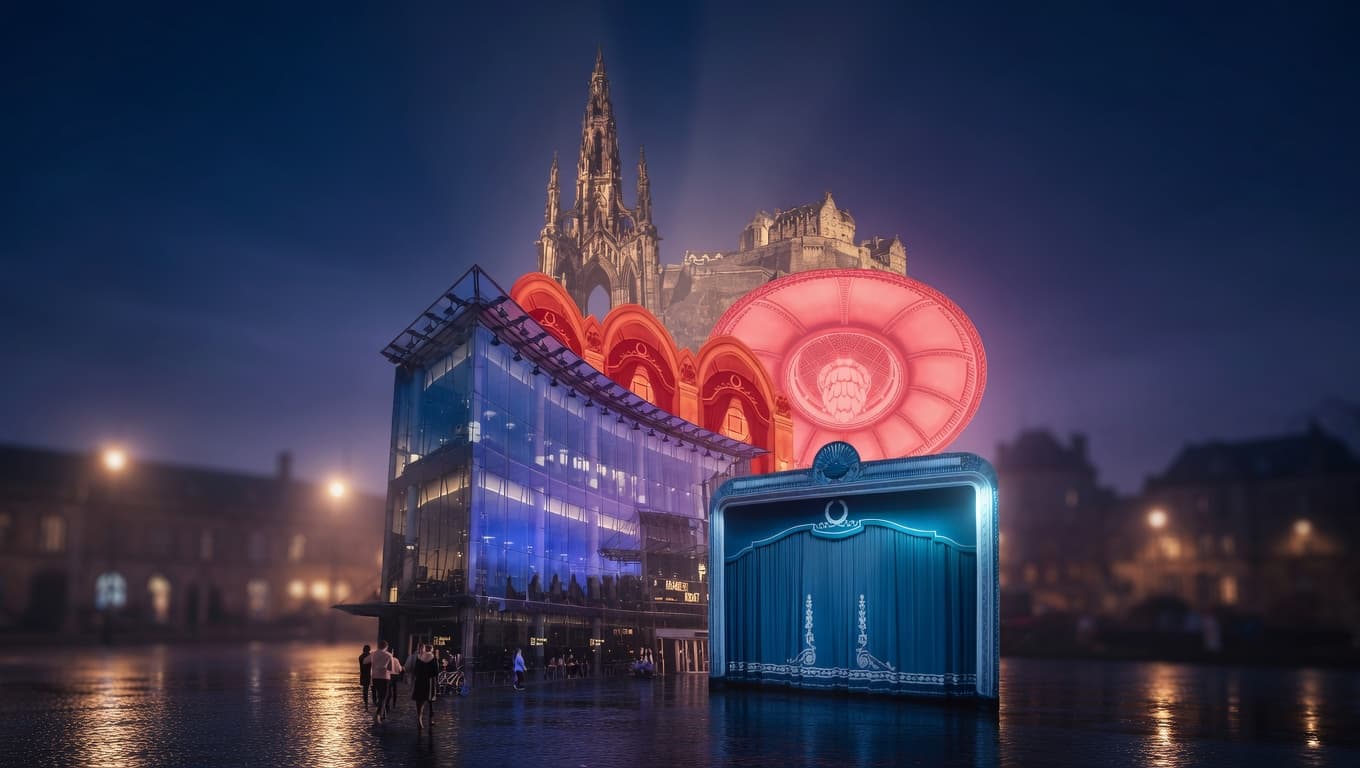
Today, the 1,915-seat Festival Theatre features the largest performance stage in Scotland and the third-largest in the UK. Its meticulously restored 1928 auditorium accommodates world-class ballet, contemporary dance, opera, and theatre programming. As the principal Edinburgh venue for Scottish Opera and Scottish Ballet, and a major stage of the annual Edinburgh International Festival, the theatre has established an international reputation as one of the world's leading dance houses. The distinctive curved glass facade has become an Edinburgh landmark, reflecting historic Nicolson Street by day and glowing invitingly at night.